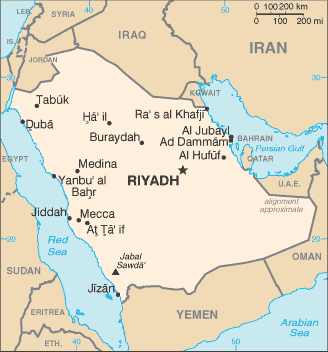
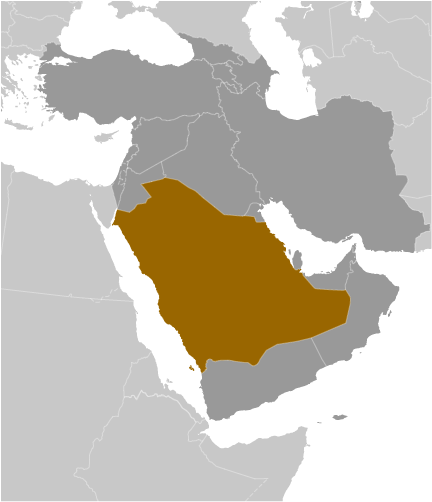
Teaching about Saudi Arabia is beneficial because it shows K-12 students how a vast desert country can shape global energy, religion, and culture. Saudi Arabia sits in the Middle East, covering most of the Arabian Peninsula. It is bordered by Jordan, Iraq, Kuwait, Qatar, the United Arab Emirates, Oman, and Yemen, with coastlines on the Red Sea and the Persian Gulf. Most of the country is desert, including the Rub' al Khali, one of the largest sand deserts in the world. The climate is extremely hot and dry, with little rainfall.
Studying Saudi Arabia builds key geographic skills. Students can explore how desert climate limits farming and how the country relies on desalination for water. They can also learn how Saudi Arabia holds some of the world's largest oil reserves, making it a key player in global energy markets. Its location gives it control over important shipping routes, connecting geography to trade and economics.
The country's cultural geography is rich, as the birthplace of Islam and home to the holy cities of Mecca and Medina. For young learners, Saudi Arabia is memorable because of its deserts, oil wealth, and religious significance. Studying it builds map skills, cultural awareness, and understanding of how geography shapes a nation's economy and global influence.
|